Our Steel
What actually determines how a leatherworking knife performs on the bench — steel, heat treatment, blade geometry, and construction, explained in plain terms.
Steel is one part of the equation.
There is no single steel that makes a knife good on its own. Performance comes from how several things work together: the steel itself, how that steel is heat treated, the geometry of the blade, how the knife is constructed, and how well the design suits the cut you’re actually making. A well-chosen steel with a rushed heat treatment will underperform a more modest steel that’s been treated correctly — and a knife with excellent steel but the wrong geometry for the job still won’t feel right in the hand.
We think about all of these together, rather than treating steel type as a marketing headline on its own.
What our primary line uses
| Steel | J2 stainless steel |
| Heat Treatment | Controlled vacuum heat treatment |
| Hardness | Approximately 60 HRC |
| Construction | Full-tang, where applicable to the model |
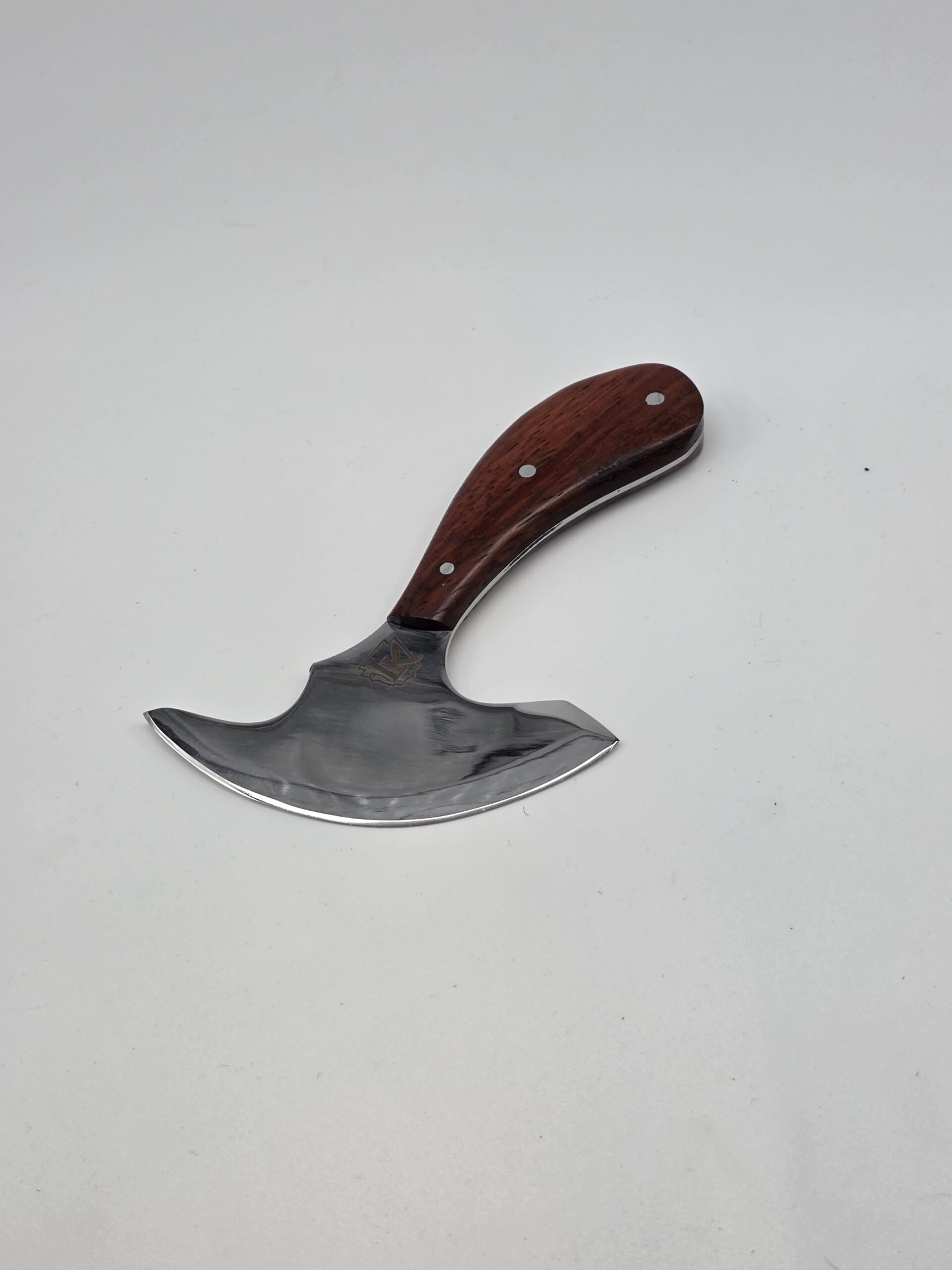
| Finish | Highly polished / mirror-polished on applicable models |
| Handle | Hardwood or specialty wood, depending on model |
Exact specification varies by model — see each product page for details.
Hardness is a trade-off, not a target to maximize.
Heat treatment is what turns raw steel into a blade that holds an edge without becoming brittle or difficult to sharpen. A vacuum heat treatment process heats and cools the steel in a controlled, oxygen-free environment, which supports a more consistent result through the blade than treating it in open air.
Harder isn’t automatically better: a blade that’s too hard can chip under the kind of repeated, controlled pressure leatherwork involves, while one that’s too soft won’t hold an edge through a full day’s work. Our primary line targets approximately 60 HRC — a hardness range chosen for leatherworking use, not for a spec sheet number.
Built for the bench
Leather Knife Co. knives are purpose-designed for leatherworking — cutting hides, pattern cutting, trimming, skiving, detail work, controlled pull cuts, and curved or rocking cuts, depending on the blade design. Blade geometry is chosen for the task: a head knife’s curved edge suits rocking cuts through a hide, while a trim or detail knife’s profile is built for controlled, precise work. Full-tang construction, where used, is meant to give the knife a stable, controlled feel through repeated use rather than just added weight.
Steel. Heat Treatment. Geometry. Construction. Performance.
Every Leather Knife Co. tool is judged against the same standard — not by any single spec in isolation.